 by
by In recent years, growing public awareness about infectious diseases has made people more cautious about viruses spread through animals and environmental exposure. One virus that continues to raise concern worldwide is Hantavirus. Although relatively rare, Hantavirus infections can become extremely dangerous if symptoms are ignored during the early stages. Understanding the warning signs and knowing when to seek medical attention can significantly improve outcomes.
Understanding Hantavirus and How It Spreads
Hantavirus is a virus primarily carried by rodents such as rats and mice. Humans usually become infected after coming into contact with rodent urine, droppings, or saliva. In many situations, people unknowingly inhale virus particles while cleaning dusty storage rooms, attics, garages, barns, or abandoned spaces.
Unlike common viral infections, Hantavirus can rapidly affect the lungs and other organs if treatment is delayed. Health authorities continue to emphasize prevention and awareness because early recognition of symptoms is extremely important.
Why Early Detection Matters
One of the biggest dangers of Hantavirus is that the early symptoms often resemble common illnesses such as the flu, viral fever, or seasonal infections. Many individuals initially ignore these signs, believing they are dealing with ordinary fatigue or fever.
However, the condition can worsen very quickly within a few days. Early diagnosis and hospitalization greatly increase the chances of recovery and help prevent severe complications.
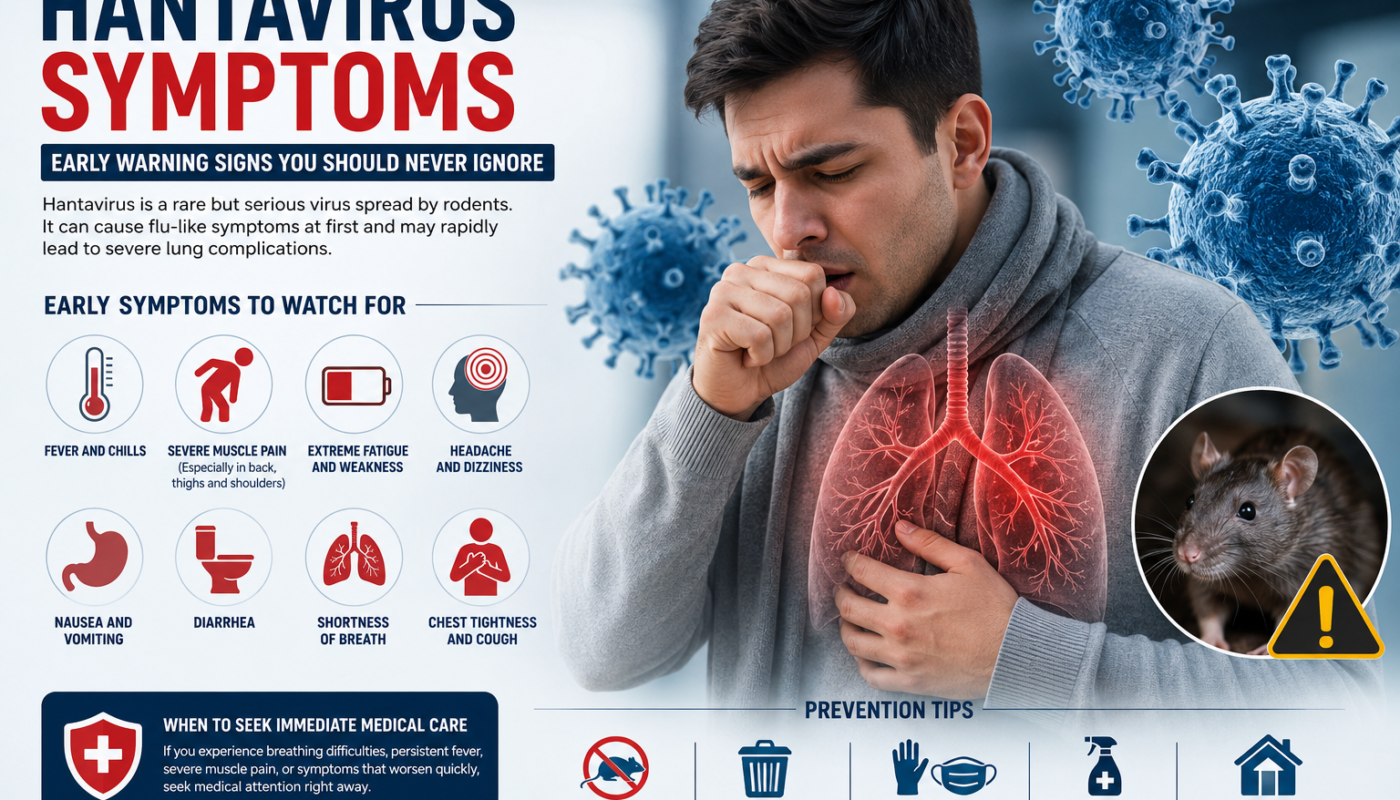
Early Warning Signs of Hantavirus
Fever and Chills
The earliest symptom in most cases is sudden fever accompanied by chills. Body temperature may rise quickly, and many people feel unusually weak even during the first stages of infection.
Severe Muscle Pain
Muscle aches are another major warning sign. Pain commonly affects:
- Lower back
- Thighs
- Shoulders
- Hips
Unlike regular body pain from tiredness, Hantavirus-related muscle pain can feel intense and persistent.
Extreme Fatigue and Weakness
Many infected individuals report overwhelming tiredness that interferes with normal daily activities. Even small physical tasks may feel exhausting.
This type of fatigue usually appears alongside fever and muscle pain during the initial phase of infection.
Headaches and Dizziness
Frequent headaches and feelings of dizziness may also occur. Some people experience difficulty concentrating or maintaining balance due to weakness and dehydration.
These symptoms may appear mild at first but should never be ignored if there has been possible exposure to rodents or contaminated environments.
Digestive Symptoms That Often Go Unnoticed
One of the lesser-known aspects of Hantavirus is that digestive symptoms may appear before serious breathing problems begin.
Common Digestive Symptoms
- Nausea
- Vomiting
- Stomach pain
- Diarrhea
- Loss of appetite
Because these symptoms resemble food poisoning or stomach infections, many patients delay seeking medical help.
Breathing Difficulties: A Serious Emergency Sign
As the infection progresses, breathing problems may suddenly develop. This stage is considered extremely dangerous and requires immediate medical care.
Emergency Respiratory Symptoms
- Shortness of breath
- Tightness in the chest
- Rapid breathing
- Persistent coughing
- Difficulty getting enough air
At this stage, fluid may begin building inside the lungs, making breathing increasingly difficult.
Hantavirus Pulmonary Syndrome (HPS)
In severe cases, Hantavirus can develop into Hantavirus Pulmonary Syndrome (HPS), a life-threatening respiratory illness that affects lung function.
Doctors consider HPS a medical emergency because oxygen levels can fall rapidly within a short period of time. Intensive care and oxygen support are often required.
Who Is Most at Risk?
Certain groups may face a higher risk of exposure to Hantavirus, especially individuals who spend time in areas where rodents are present.
Higher Risk Environments
- Farms and rural homes
- Warehouses and storage spaces
- Cabins closed for long periods
- Construction sites
- Forest camping areas
- Abandoned buildings
People cleaning dusty locations without proper protection are particularly vulnerable.
How to Reduce the Risk of Infection
Preventing rodent exposure is the most effective way to avoid Hantavirus infection.
Important Prevention Tips
- Seal holes and entry points in homes
- Store food in closed containers
- Dispose of garbage properly
- Avoid sweeping rodent droppings directly
- Use gloves and masks while cleaning contaminated areas
- Ventilate closed rooms before entering
Proper cleaning methods help reduce airborne virus particles.
Safe Cleaning Practices
Experts recommend avoiding dry sweeping because it can release contaminated dust into the air.
Instead:
- Open windows and ventilate the area
- Spray disinfectant on droppings and surfaces
- Wear gloves and a mask
- Use paper towels for cleanup
- Wash hands thoroughly afterward
These simple precautions can greatly lower infection risk.
When to See a Doctor Immediately
You should seek medical attention immediately if you experience:
- Fever after rodent exposure
- Sudden breathing problems
- Severe unexplained fatigue
- Persistent chest discomfort
- Flu-like symptoms that worsen quickly
Early medical evaluation can be lifesaving.
Mental Awareness and Public Health Education
Modern health awareness in 2026 emphasizes prevention and education. Public health organizations continue encouraging people to recognize dangerous symptoms early rather than waiting for conditions to worsen.
Many severe Hantavirus cases become critical because early symptoms are mistaken for minor illnesses. Increasing awareness can help individuals act faster and protect both themselves and their families.
Conclusion
Hantavirus may be rare, but it is a serious illness that should never be underestimated. The infection often begins with ordinary symptoms such as fever, muscle pain, and fatigue before rapidly progressing into dangerous respiratory complications.
Recognizing the early warning signs, reducing exposure to rodents, and seeking medical help quickly are the most important steps toward prevention and recovery.
In 2026 and beyond, health experts continue to emphasize a simple but powerful message: early action saves lives.
